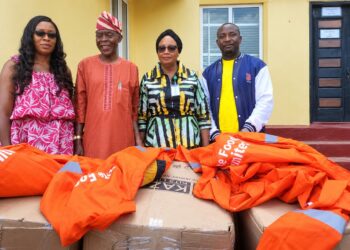



Dr Benjamin Ubido, the Managing Director of Network Oil & Gas Ltd., says African child remains a symbol of hope, creativity and possibility in spite of the numerous social and economic challenges confronting children across the continent.
Ubido said this at the 2026 International Day of the African Child (IDAC) celebration on Thursday in Lagos, organised by the Makarios Initiative for Health and Humanitarian Development (MIHHD).
The event has the theme: ”Ensuring Universal Access to Water, Sanitation and Hygiene for Every Child in Africa”.
Delivering the keynote address, he urged African children to embrace hard work, resilience, discipline and determination as essential tools for achieving success against all odds.
Ubido said many African children continued to excel in academics, sports, science, technology, arts and literature, in spite of poverty, insecurity, inadequate infrastructure and limited access to quality education.
“When we talk about the African child, we must be honest about the realities many children face. Yet the African child remains strong, creative, intelligent, resourceful and hopeful,” he said.
According to him, excellence goes beyond academic achievement and includes character development, positive relationships and personal growth.
He encouraged the children to see challenges as opportunities rather than obstacles, stressing that hard work, discipline and resilience had enabled many people from disadvantaged backgrounds to achieve remarkable success.
Ubido described education as one of the most powerful tools for personal and societal transformation, urging students to attend classes regularly, study diligently and participate actively in learning.
He also advised them to believe in their abilities, learn from mistakes and remain focused on their goals.
“The key to succeeding against all odds is refusing to listen to voices that tell you something is impossible,” the MD said.
Speaking on resilience, Ubido said that many African children walked long distances to school, studied without electricity and faced numerous hardships, yet continued to pursue their dreams and strive for excellence.
He said the future of Africa would remain bright if young people embraced diligence, determination and excellence.
Also speaking, finance expert, Mr Gerald Ikem, said that education should not be limited to acquiring academic knowledge but must also focus on building character and values.
Ikem said that children who developed integrity, honesty, kindness, respect and responsibility were better positioned to become productive members of society.
“What you are building today will determine who you become tomorrow,” he said.
Ikem said that Africa’s future depended on raising children who would become ethical leaders, innovative entrepreneurs, responsible professionals and compassionate citizens.
He urged the children to value themselves, choose good friends and strive to be positive examples in their schools and communities.
In another presentation, drug abuse advocate, Mr Victor Abraham, warned children against substance abuse, describing drugs as ”dream killers” and ”destiny destroyers”.
Sharing his personal experience, Abraham said he was introduced to drugs at the age of eight and later became addicted to harder substances, a situation that negatively affected his education and future.
“When I was growing up, I never planned to become a drug addict, but drugs almost destroyed my future,” he said.
Abraham educated the children on the dangers of illicit substances, including synthetic drugs and methamphetamine, noting that drug abuse could damage the brain and other vital organs.
He urged them to resist peer pressure, avoid experimenting with drugs and remain focused on their education and aspirations.
The speakers unanimously encouraged the children to cultivate hard work, resilience, discipline, integrity and self-confidence, that neither poverty nor difficult circumstances should limit their dreams.
They expressed confidence that African children possessed the capacity to overcome challenges, break barriers and become future leaders capable of transforming the continent.