



…As Experts Carpets FG of Misleading Health Justification against Economic Realities

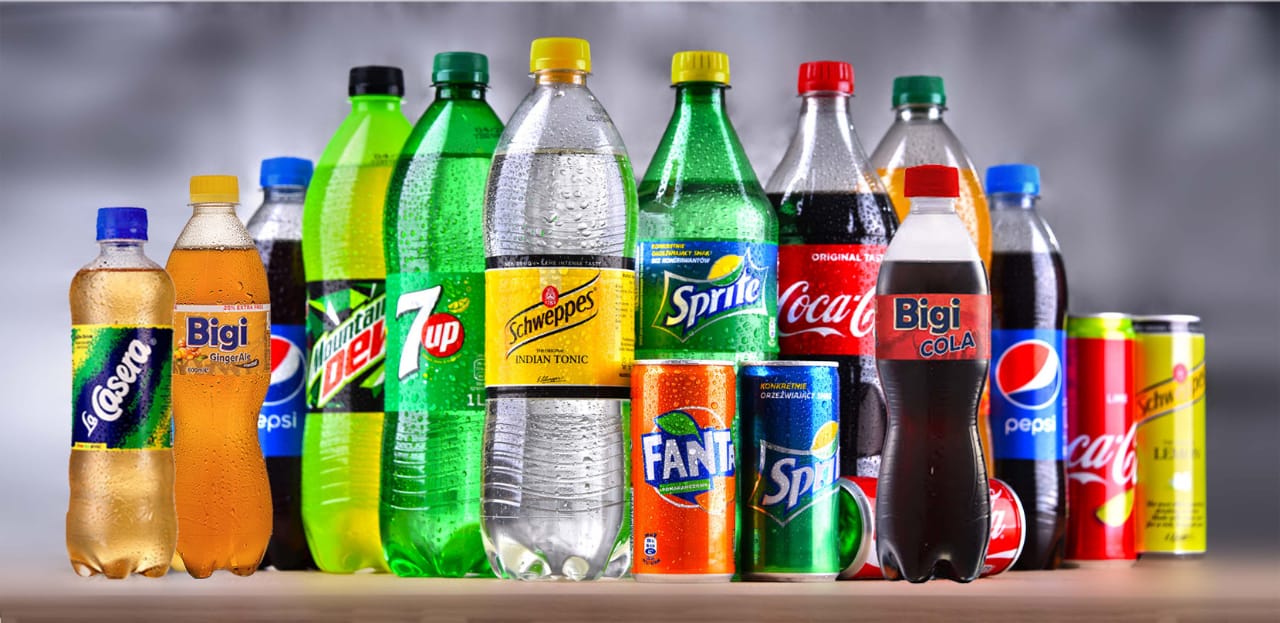
Barely two weeks after the Sectoral Group of the Manufacturers Association of Nigeria [MAN] raised a discomforting alarm over strong indications that the Federal Government is planning a proposed additional 20 percent Ad-Valorem Excise Tax on the Carbonated Soft Drinks [CSD] segment, the group has once again decried the ongoing emotional campaign to string up the sugar angle by a subterfuge group hurriedly concocted and purportedly sponsored by the government. The faceless group has been masquerading and trying to use the sugar angle to rationalise an economic virus that may become a pandemic which it intends to unleash on the non-alcoholic beverage industry. This is believed to be coming in reaction to the multidimensional pressure that has been unleashed on the government by the vehement opposition in response to the proposed regulation by the sectoral group and concerned stakeholders over the last couple of weeks.
Spurred by the vociferous campaigns that have been mounted on the issue, government lobbyist are coming up using an emotional but weak health angle to knock the public outcry. A coalition, the National Action on Sugar Reduction, recently staged what it termed a peaceful display in Abuja urging the government to increase taxes on sugary drinks and invest the revenue into public health.
What one is quick to consider is: Why this group?, What is the interest of the group? It is such that it can be safely concluded that the faceless group is simply the last straw that the government is holding onto in its resolve to go ahead with the proposed primitive and retrogressive economic approach whose greater consequence portends adverse social, political, economic and even health implications for the entire system.
The subterfuge group opine that ‘’soft drink taxes are a ‘‘win’’ for Nigerians, adding that its consumption of sugary drinks is known to be a risk factor for diseases like type 2 diabetes, heart diseases, stroke and cancers.
But in a swift reaction to the coalition’s campaign, the sectoral group have stated that the ongoing campaign to lynch sugar and use it as a poster boy or silver bullet to solve Nigeria’s healthcare problems is, at best misleading. According to the group: ‘’Citizens’ health is a significant responsibility of all governments, and any action to protect citizens’ health is desirable and should be supported. But the false attribution of sugar-related ailments to a single cause or product is wrong.’’

The group further stated that the lobby group that has encouraged the Federal Government of Nigeria (FGN) to impose higher taxes on sugar-sweetened beverages (SSB) has used data that do not support their argument for the increases in taxes on sweetened beverages.
‘’Firstly, the group agrees that 70% of citizens’ medical bills in the country are private expenses and do not involve the government. The call for the government to raise taxes to cover these private expenses is perplexing and inconsistent with best global tax practices that place the burden or incidence of tax on a product to cover the cost to the government of treatment of patients that consume the product.’’
Corroborating this position, Mr. Teslim Shitta-Bay, a foremost economic analyst while countering the jaundiced and misleading position put forward by the lobby group argued that, the advocates of the so-called sugar tax have argued that in 2007 Nigerians consumed 9ml per person, and in 2021 or fourteen years after, they consumed 14ml per person representing a compound annual growth rate (CAGR) of 3.46%, which is only slightly higher than the national population growth rate over the period. Nigerians consume 8kg of sugar per person per annum, which is below the prescribed World Health Organisations (WHOs) of 9.1kg per person and is significantly lower than the United Kingdom’s 30kg or the United State of America’s (USA) 46kg per person.
Shitta-Bay also raised greater health concerns of the aftermath of the sugar tax. ‘’Yes, health issue can be connected to economic development but in this case, there is no justification to use health to rationalise simply because the Carbonated Soft Drinks sector has not violated the regulations.
Drawing a similar parallel with the tobacco sector case. The sector also suffered a similar fate f the imminent dangerous trajectory that the Carbonated Soft drinks is been pulled towards.
The regulatory position was such that advertising of tobacco was banned. Meanwhile, the effects of that were that the smokers migrated to other unregulated substances and drugs including tramadol and sundry substances.
No doubt, this only made a mess of the health justification been rationalised by the government as this was inadvertently been promoted because users were forced to move from regulated substances which had become a part of their social life at that time to other hard and unregulated drugs due to over regulation.
Similarly, when the cost of carbonated drinks goes higher in view of the reality of the additional Excise Tax, those who consume these drinks will look for alternatives. These alternatives are such that the government cannot control and access their distribution. For instance, the government cannot control Zobo or Kunu. Kunu and Zobo have sugar contents that have not been scientifically subjected to factory tests regarding their sugar contents compared to carbonated soft drinks.
Like it is often, it is always coming with a multiplier effects. Another greater risk is that most of the unregulated substances, for example zobo and kunu are sold at places where government cannot access let alone control. For instance, the over regulation of drinks like gin made it to come in small sachets but its major distribution and sales is at motor parks where drivers indulge same making a mess of the ‘’Don’t drink and drive’’ regulations that was put in place to curb over-indulgence in alcohol and the concomitant effects of drivers coming under the influence of the alcohol and placing their own lives and those of several commuters at risk. But, that is where you find the greatest concentration of Gin and that is one of the effects of over regulation.
Controlling sugar consumption is essential but raising taxes is not the solution. The best way to control sugar consumption is by setting and enforcing regulations around the amount of sugar used in carbonated drinks. In addition, a social awareness programme explaining the consequences of excessive sugar consumption should be made with messages placed on non-alcoholic carbonated drink bottles, like the country’s Chief Medical Officer’s warning on a cigarette pack.
The FGN needs revenue, and rightly so. On a net position, government targets a total of 81 billion in collection with the successful implementation of the proposed additional 20 percent Ad-Valorem Excise Tax , but the N10/per litre tax on Carbonated non-alcoholic drinks has already led to a 16% fall in industry revenue. Given that, Shitta-Bay affirmed that the ugly scenario which would be created will affect the overall economic productivity that government is trying to protect.
He averred that a PwC study shows that the expected revenue government intends to generate from the proposed additional 20 percent Ad-Valorem excise tax is about N81billion, and a cursory look at the reduction in Value Added Tax [VAT], Company Income Tax [CIT], and Personal Income Tax [PIT], there would be about N200 billion unclaimed tax being threatened, which is not good for the economic recovery policy of an emerging market economy like Nigeria. The meaning is that the government would not meet its desired increased net revenue target from the sector in 2022/2023.
In essence, what this portends for the system is such that a position known as the Cobra effect is forced on the government such that its solution is worse than the original problem.


